
The maintenance of bronze sculptures requires a balance of cleaning, rust prevention, environmental control, and professional restoration. Different scenarios (such as museum-quality collections, large outdoor sculptures, and small home decorations) necessitate specific procedures. Below is a detailed guide for each scenario:
I. Daily Cleaning: Gentle Stain Removal, Avoiding Damage
Basic Cleaning: Gently wipe surface dust with a soft, dry cloth (such as an eyeglass cleaning cloth). For stain removal, dilute dish soap with warm water in a 1:10 ratio, apply with a soft cloth, and rub in circular motions. Rinse thoroughly with clean water and dry immediately (to prevent water residue).
Stubborn Stains Treatment:
Light Stains: Mix toothpaste, dish soap, and white vinegar (1:1:1) to form a paste. Gently scrub with an old toothbrush, rinse, and dry.
Stubborn Stains: Purchase a professional bronze cleaner (such as those commonly used in museums). Spray onto the surface, let stand for 5 minutes, then wipe away. Wear rubber gloves and ensure ventilation during the process.
II. Rust Prevention and Removal: Differentiating Rust Stages for Precise Treatment
Corrosion Classification:
New Corrosion (Light Green/Light Yellow): Apply tomato sauce for 10 minutes (acetic acid softens the rust layer), then rinse with water.
Stubborn Old Rust: Spray with a professional copper cleaner, let stand for 5 minutes, then wipe off.
Long-Term Rust Prevention: Monthly, apply olive oil to a cotton pad and gently wipe the sculpture surface (simulating a “face mask”), then place it in a drying cabinet with a desiccant (such as silica gel). If the hygrometer shows humidity >60%, a dehumidifier needs to be turned on.
III. Environment and Storage: Temperature and Humidity Control, Keep Away from Corrosive Sources
Environment Selection:
Indoors: Place in a dry, well-ventilated area, away from acids (such as vinegar, lemon juice), oxides (such as bleach), and other corrosive substances.
Outdoors: Large copper sculptures require regular maintenance by professional organizations using methods such as “alkaline baths” (which can prevent rust for up to 2 years). Avoid self-treatment that could damage the surface.
Humidity Control:
Indoors: Maintain humidity <60%;
Outdoors: Large sculptures require regular dehumidification to prevent accelerated corrosion in damp environments.
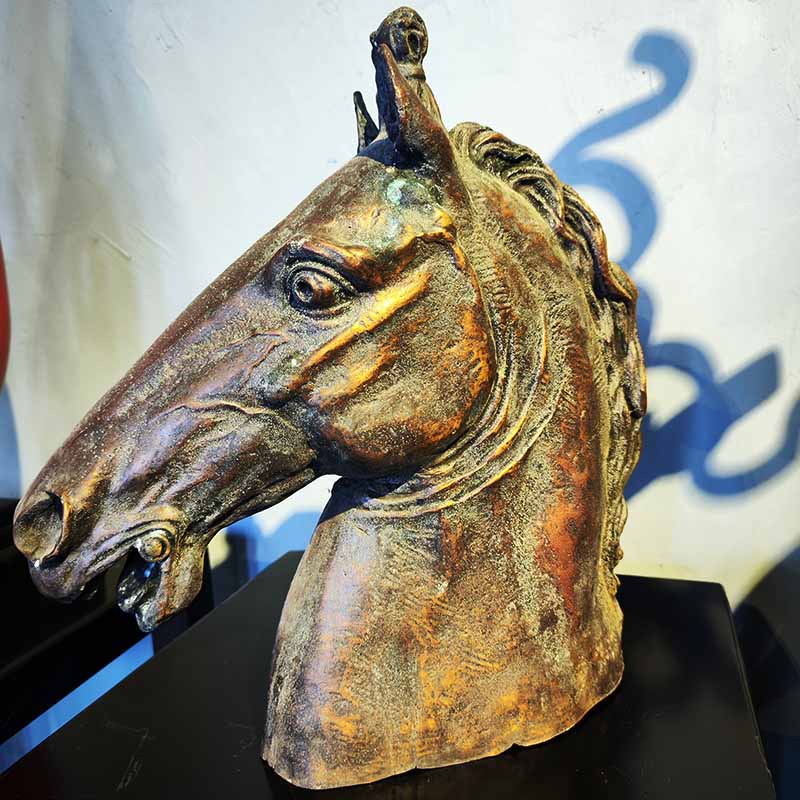
IV. Professional Restoration: Complex Corrosion Requires Targeted Treatment
Museum-Grade Collections: Performed by professional restorers. Before cleaning/alkalizing/immersion, salt residue must be tested (e.g., using a silver nitrate droplet test) to ensure the absence of chloride salts before proceeding;
Post-Restoration Drying: Immerse the sculpture in alcohol, then place it in a desiccant heated to 80°C to thoroughly remove moisture;
Variegation Protection: Naturally formed patina (protective rust layer) cannot be removed. During restoration, it is strictly forbidden to apply chemical agents to imitate or create artificial green rust (this easily leads to coarse rust).
V. Precautions: Avoidance Guide
✖️ Do not use steel wool or bleach: Steel wool will scratch the copper surface, and the chloride ions in bleach will accelerate corrosion;
✖️ Do not use white powder or diamond abrasive to scrub: This will damage the surface of the bronze artifact and destroy its historical information;
✖️ Do not attempt to remove rust yourself: Stubborn rust requires professional tools (such as museum-grade chemical reagents), and improper handling can easily damage the sculpture.
Following the above methods can effectively extend the lifespan of bronze sculptures, allowing their artistic beauty and historical value to be preserved for a long time. For more precise guidance, it is recommended to consult a professional cultural relic restoration institution or refer to museum-grade maintenance standards.